
Burger Box Size Guide: Which Size Fits Your Menu?

Choosing the wrong burger box size leads to crushed buns, spilled fries, and customers who remember the mess more than the taste. This guide walks through the standard size groups, the two main box styles, and the material and printing decisions that matter for burger brands.
1. Burger Box Size Groups
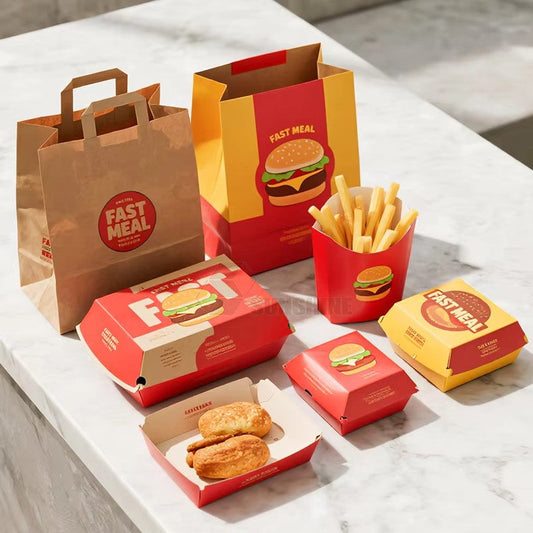
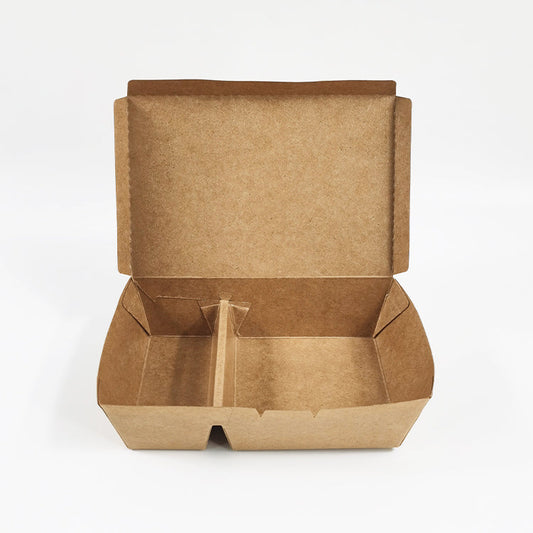
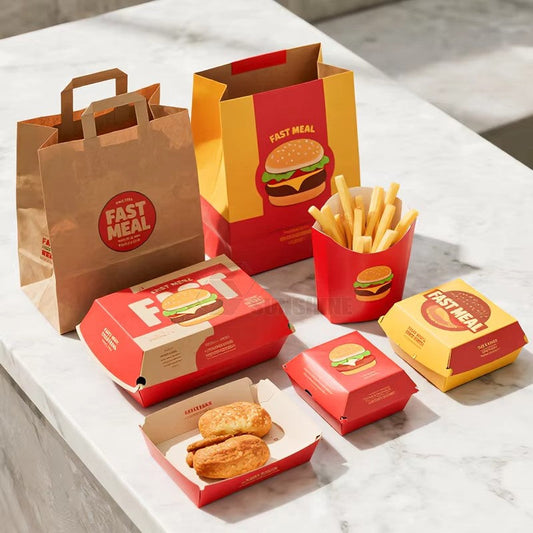
Single burgers usually fit a box around 11 x 11 x 6 cm. Double burgers need more height: around 11 x 11 x 8 cm or a dedicated double-stack box. Combo boxes that hold a burger and fries together are longer, around 15 x 12 x 6 cm, and often have a separate compartment for fries so they stay crisp. The best way to choose is to measure your largest burger with its wrapper, add a few millimeters of clearance, and pick the nearest standard size. Custom sizes are always possible for consistent volume.

2. Clamshell Boxes vs Open Trays
Clamshell boxes close completely, which keeps heat in and protects the burger during delivery. Open trays with a separate paper wrap are lighter and cheaper, and many restaurants use them for dine-in or short-distance orders. If you deliver, a clamshell box with a secure closure is usually the safer choice. Some brands use a two-piece set: a clamshell for the burger plus a separate fries tray or carton, which is easier to portion and pack.
3. Material and Grease Resistance
Kraft board gives a natural, eco-friendly look and hides oil marks better than white board. Coated white board prints brighter colors and looks more premium, which suits brands with strong visual identity. For greasy burgers, choose a board with grease-resistant treatment or pair the box with a greaseproof paper liner. Recyclable paperboard is the default in most markets now, and it supports the sustainability story customers expect from food brands.
4. Printing and Branding
The lid of a burger box is prime advertising space. Logo, brand colors, and a short slogan are the essentials. Offset printing supports full-color artwork, gradients, and fine text, and lamination protects the surface from grease and moisture. For limited-edition menus, short-run custom printing keeps the cost manageable. If you are testing a new market, start with a simple one- or two-color print and expand later.
5. Ordering, Sampling and Lead Time
Confirm the exact dimensions, material, and printing spec before ordering, and always request a sample first. A printed sample lets you check the fit with your real burger, the grease performance, and the color accuracy. Standard printed boxes are produced in days to a few weeks depending on quantity; urgent orders should be discussed with the manufacturer directly. Keep your box design files in vector format for the best print quality.
Related products you may need:


Request a Quote