
Clamshell vs Folding Carton: Which Takeaway Box Structure Is Right for You?
Two box structures dominate takeaway packaging: the clamshell and the folding carton. They look similar at first glance, but they behave differently on the line, on the shelf, and in the customer's hands. This guide compares them so you can choose the structure that fits your menu and your operation.
1. What Each Structure Is
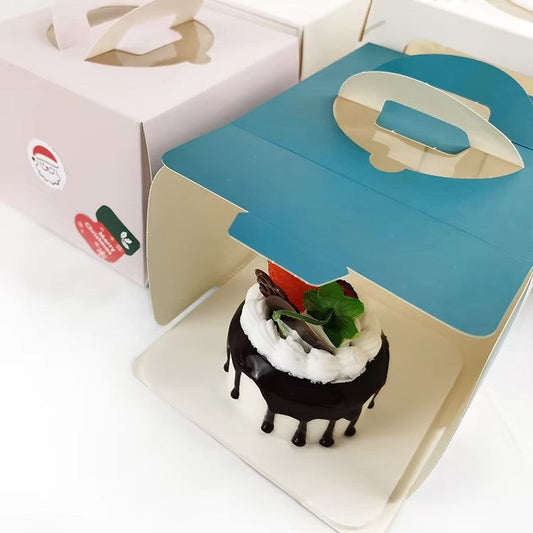
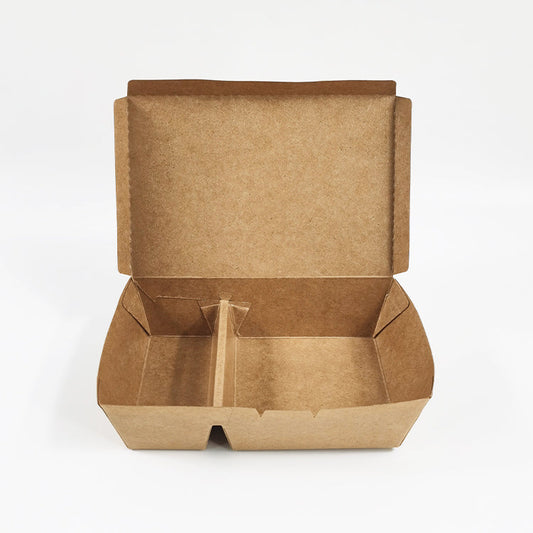
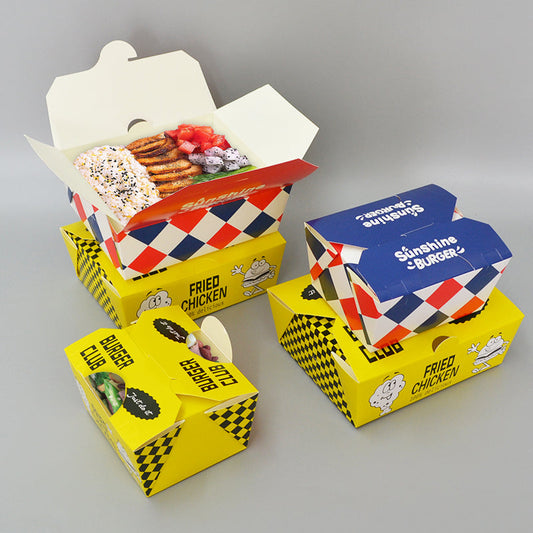
A clamshell box opens like a shell, with the lid and base connected along one edge, so it opens and closes in one piece. A folding carton starts flat, with separate top and bottom flaps, and is erected at packing time. The clamshell is the classic fried chicken and burger box; the folding carton is the classic cake box and retail takeaway box. Both can be custom printed, but their strengths are different.
2. Packing Speed and Workflow
The clamshell wins on speed: it opens in one motion, so staff can fill it quickly during rush hour. The folding carton needs to be erected first, which adds a step, but it stores flat and takes less space in storage and delivery. If your kitchen serves high volumes at peak times, the clamshell is usually the better pick; if you pack fewer orders or deliver pre-packed retail items, the folding carton's flat storage saves space.
3. Printing and Branding
Folding cartons give you more printable surface, because the flaps and side panels offer space for logos, ingredients and QR codes. Clamshells have a simpler shape, which prints cleanly on the top and sides. For a strong unboxing moment, many brands use a printed clamshell with a greaseproof liner inside; for information-heavy packaging, a folding carton with full-panel printing works better. Both are printed with food-grade inks and finished with lamination or spot UV on request.
4. Grease Resistance and Food Fit
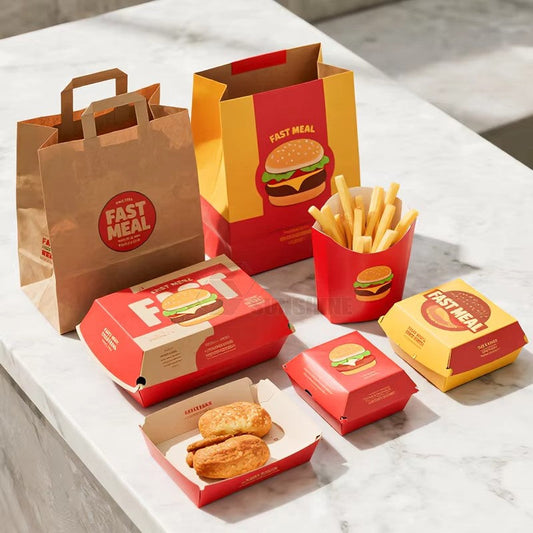
Fried chicken, burgers and fries are the clamshell's natural home, because the structure holds food securely and the open design releases steam. Folding cartons handle bakery items, salads and pre-packed meals well, and they pair with a window for product visibility. Whatever structure you choose, plan a greaseproof liner for oily food, and confirm the board weight with your supplier so the box holds its shape during delivery.
5. Which One Should You Choose?
Match the structure to your workflow: high-volume fried food goes in clamshells, retail and bakery items go in folding cartons, and many brands run both. You can start with one structure and add the second when your menu grows. Our factory produces both, with custom printing on the full surface, and we recommend the right structure based on your product and packing process.
Related products you may need: